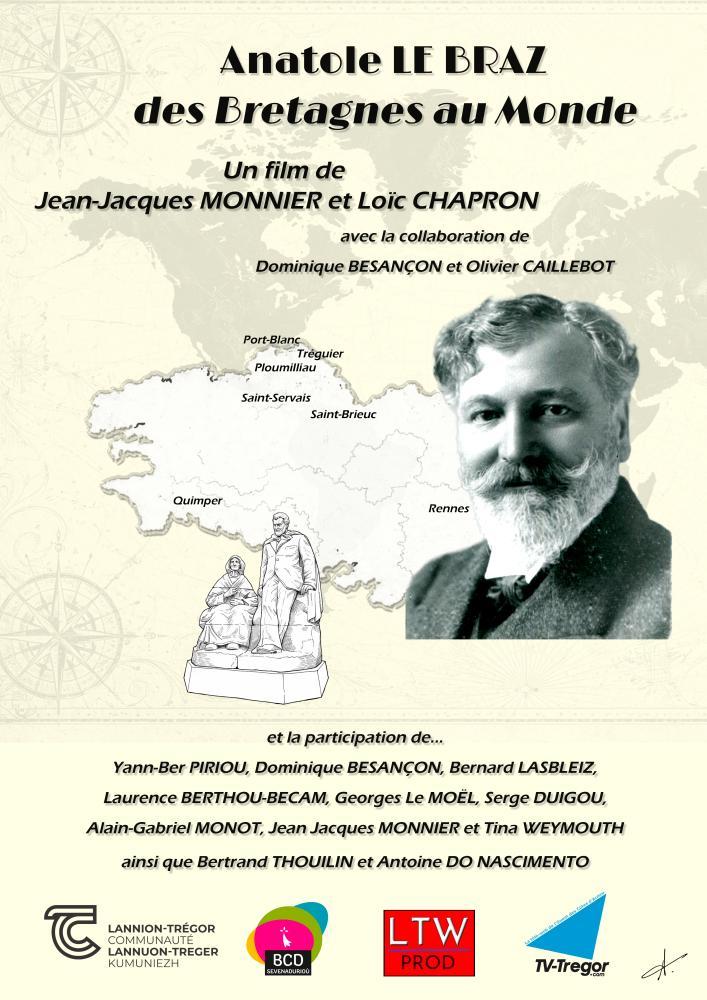
The 13th screening-debate of the film "Anatole Le Braz, from Brittany to the World," marking the centenary of the death of the renowned Breton writer, will take place at the Alain Gérard media library in Quimper this Saturday, November 7 at 3 PM. This cinema-debate follows the one in Tréguier on Wednesday, November 4 at 6 PM - a second screening due to the audience that could not find a place in early June and precedes the screening in Lanvellec (Trégor) on Sunday, November 15 at 4 PM. For this autumn tour, the screening in Quimper will...
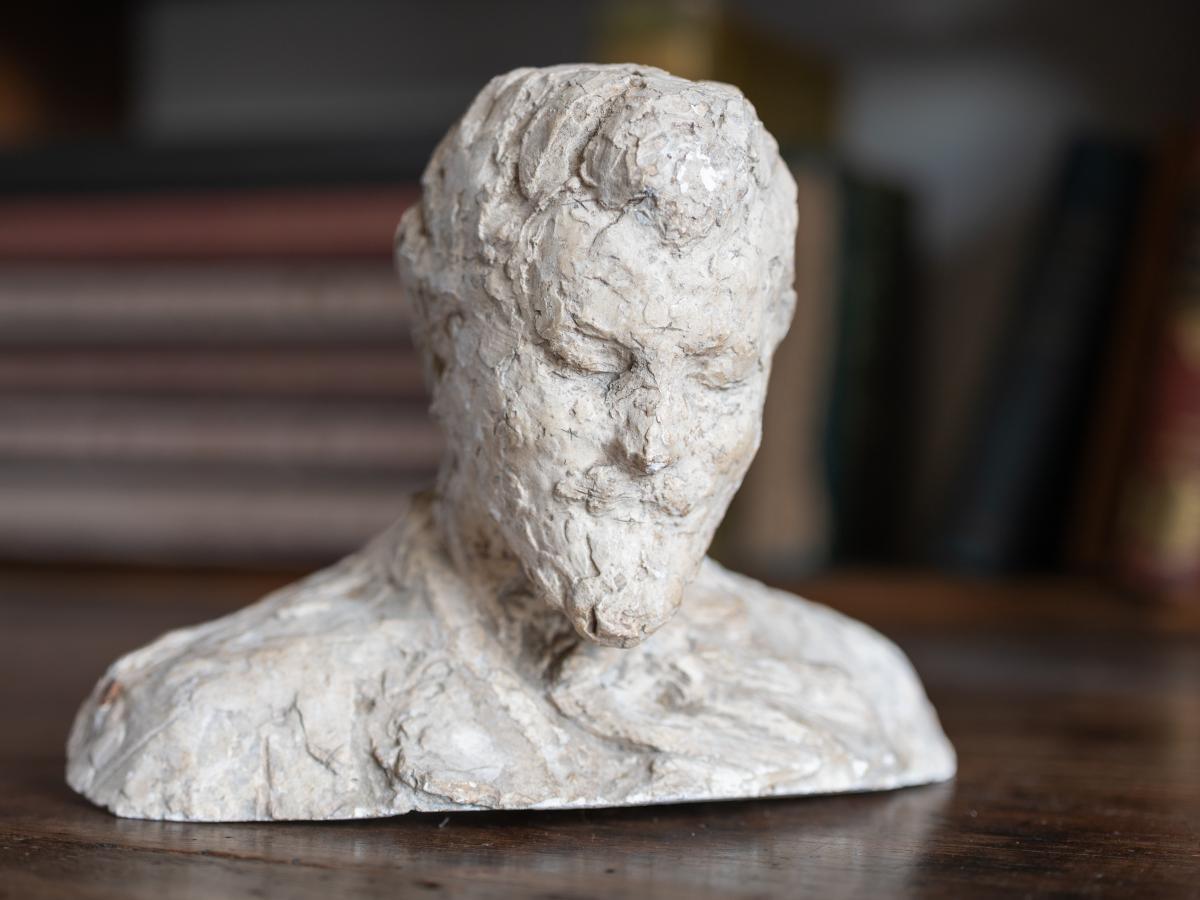
It is at the La Tour d'Auvergne high school that part of the film was shot because a pivotal moment in his career occurred there: in 1886, after his higher studies in Paris and a period of exile in Étampes, on the outskirts of Beauce, Anatole Le Braz, who was 27 years old, finally managed to return to Brittany, with a new high school opening in Quimper. He would stay there for 15 years, undoubtedly the happiest and most creative years of his life and work. In the film, two Cornish specialists, historian Serge Duigou and literature professor Alain-Gabriel Monot, welcome us on-site to what has become the La Tour d'Auvergne high school, whose appearance has changed very little since the "Le Braz" years. A plaque and a bust commemorate the visit of the famous writer, a highly regarded teacher among his students and colleagues, who would spend there years of creativity and happiness both collectively and personally.
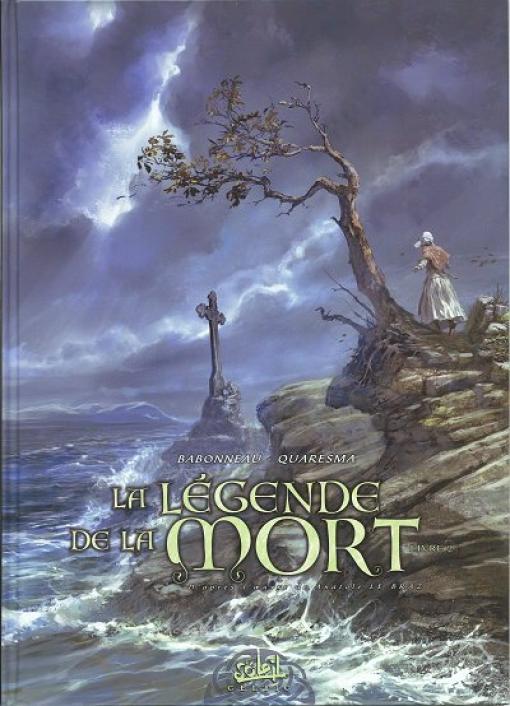 Parmi les nombreuses éditions contemporaines, l'oeuvre la plus célèbre d'Anatole Le Braz existe aussi en BD.
In these Breton lands of Cornouaille, Le Braz practiced French at the high school during these (not yet over) times of rampant Jacobinism, and very often Breton when he returned to town or to his home in Kerfeunteun. There he met a mother of three children, a widow, somewhat overwhelmed by the extent of the care and supervision her offspring required. Anatole, with his big heart, would help her and... marry her, which further integrated him into the Quimper community where he felt perfectly at ease.
He invited and received colleagues and friends, collecting as many stories, proverbs, and songs from all over Cornouaille as possible. His collections—largely on foot, between Cornouaille and Vannetais—were meticulously noted in very dense and varied notebooks where Breton occupies a significant place—partly available online on the CRBC website—while his work is primarily in French. He brought a portion back to the departmental archivist, none other than François-Marie Luzel, who had great knowledge, and to his assistant, also a Breton speaker and collector. He also found material for articles in all types of newspapers and magazines, and for the publication of books whose titles are still well-known, 130 years later.
Alongside this hyperactive life of work and human relationships, he published the famous "Légende de la mort," which has been reissued several times and translated into other languages, "La chanson de la Bretagne," "Au pays des pardons," and many others.
Of course, the film and the discussion will evoke the subsequent, sometimes terrible, events of his life. But it will also be an opportunity to reflect on the relative local oblivion of this very fruitful period of Anatole in Quimper, even though the traces are numerous, starting with the Le Braz collection at the media library.
End of autumn season
The film, requested everywhere, will take a back seat for a few months for the production team, which must embark on another cinematic project dedicated to the Monts d'Arrée. It is a pity because Le Braz's writings, contrary to the image they wrongly convey, are vibrantly relevant, 100 years after the death of an astonishingly modern writer, who owes as much to Quimper and Cornouaille as Pierre-Jakez Hélias and Max Jacob, three exceptional personalities and works that should not overshadow one another.
A reprise of the tour will take place elsewhere this winter in Brittany (Dinan, Vannes) because Le Braz concerns the whole region. But since the production team cannot visit 1,400 municipalities, one must know how to seize the opportunity!
The film participants present at the screening will, of course, engage in dialogue with the audience after the 62-minute screening.