
Morin does not describe France as a community of blood or origin but as a historical construction that has gradually Frenchified very different populations, even other nations.
The disappearance of sociologist Edgar Morin invites us to revisit a question that has traversed French political history for over two centuries: what is a nation?
The meaning of the word "nation" has evolved, at least in France, over time. From a cultural community inherited from the past, it became a political project carried by the French Revolution before being associated with the modern nation-state. Today, European construction raises the question anew in a different form: a new political nation. France is caught between two political projects, the old: the republic, the clan of sovereigntists, and the new, Europe, the clan of Europeans.
The nation before the nation
The word nation comes from the Latin "natio," which itself is derived from nasci, to be born. Originally, it simply designates a human group united by a common origin, a language, customs, and a shared territory.
Until the 18th century, the nation primarily falls within the cultural domain. In his work "La Nation entre l'histoire et la raison," Jean-Yves Guiomar reminds us that the nation then only referred to an ethnic and cultural reality. In this old conception, Brittany can be considered a nation: it has a language, a history, a collective memory, traditions, and a territory. Many regions of Europe also correspond to this definition.
The French Revolution invents the political nation
The Revolution of 1789 radically overturns this conception. Sovereignty no longer belongs to the king but to the nation. The nation ceases to be merely a cultural heritage to become a political project. Being French no longer means sharing a common origin but adhering to a political project based on freedom, equality of citizens, and popular sovereignty.
A Breton, a Basque, an Alsatian, or a Provençal who does not speak a word of French can then be considered French as long as they adhere to the Revolution. This is what Guiomar explains: in 1790, being French means being for the revolution. Bavarians, Piedmontese, even Neapolitans become French by adhering to the republican project.
This conception reaches its most famous formulation with Ernest Renan in his lecture "What is a Nation?" delivered at the Sorbonne in 1882. For Renan, neither race, nor language, nor religion defines a nation. It rests on a shared memory and a common will to pursue a collective history, a project. This nation relies more on the future than on the past. But also on the present! His famous formula that "the existence of a nation is a plebiscite of every day" remains one of the best-known definitions of the political nation.
The making of the French
At the end of the 19th century, millions of French people still spoke Breton, Occitan, Basque, Flemish, Alsatian, or Corsican. The Republic then undertook a vast project of linguistic and cultural unification with Jules Ferry's school system. Very coercive means were used to eradicate the "patois" from schoolchildren, as explained by Rozenn Milin in her book "Shame and Punishment: The Imposition of French: Brittany, France, Africa, and Other Territories." Schools, military service, administration, the press, and later radio gradually imposed French across the entire territory. The goal was to eradicate what were called patois. The objective was not only to make French a common language but to replace it with other languages. A common language allows communication among all citizens. A single language tends to replace other languages in family and cultural transmission. There has been a substitution in cultural transmission, whether forced or voluntary. In many families, parents voluntarily stop passing on their language to their children, convinced that social success now depends on French. This evolution affects not only the language but also culture itself, if we define culture as the entirety of what is transmitted from generation to generation.
Edgar Morin and Francization
It is in this historical context that we must understand Edgar Morin's reflection. For the sociologist, France is not an ethnicity but the result of a long historical process. He writes that "France was constituted by the francization of extremely diverse peoples and ethnicities," and he asserts in 2015 on his Mediapart blog that "to be French is to have been francized." He ultimately acknowledges the truth.
The history of France, during the course of history itself, should then be presented from the perspective of francization.-- Edgar Morin
France thus appears as the product of continuous francization rather than as the expression of a homogeneous ethnic identity. Michel Rocard, himself from a family attached to regional cultures, emphasized that France constituted a particular case in Europe where the state had largely contributed to the creation of the nation. According to him, "France was built as a unique case in Europe, where it was militarily the state that created the nation by destroying local cultures." In a document revealed by Wikileaks, the former Prime Minister explained to American Ambassador Craig R. Stapleton in October 2005 that France is difficult to govern because it formed during the Revolution through the assimilation of heterogeneous cultures. "France was created by the destruction of five cultures: Breton, Occitan, Alsatian, Corsican, and Flemish."
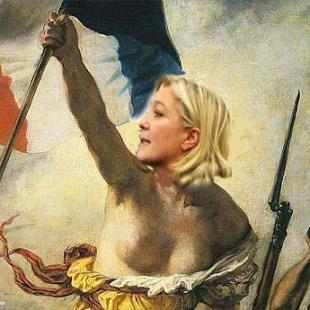
In the face of the globalization of cultures and communication networks and the massive arrival of immigrants, Edgar Morin ultimately declares, "It follows that French identity must remain a dual identity, and now attentively respect, including for the French themselves, ethnic/cultural diversities, which entails a surpassing of homogenizing Jacobinism." He advocates for a surface-level francization primarily linked to secularism. To conclude this brief analysis of the French nation, one can only echo one of the comments from Edgar Morin's blog: "To be francized is also to be colonized," or more radically, "To be French is to be colonized or a descendant of colonized people."