Megaliths and Proto-Writing: A Synthesis of Engraved Signs from Anatolia to the Atlantic?
The awakening of the sign: when humanity began writing its myths
The engraved signs of megaliths reflect the emergence of a codified symbolic thought that carries myths. The emergence of a structured symbolic thinking at the beginning of the Holocene (*) necessitates a re-evaluation of non-verbal communication systems, traditionally relegated to the status of mere artistic or ritual expressions. Long before the establishment of Neolithic agricultural societies, the hunter-gatherers of the Pre-Pottery Neolithic in the Near East (Upper Mesopotamia) were already handling complex communication systems.
From administration to the sacred: the theses of Finkel and Schmidt
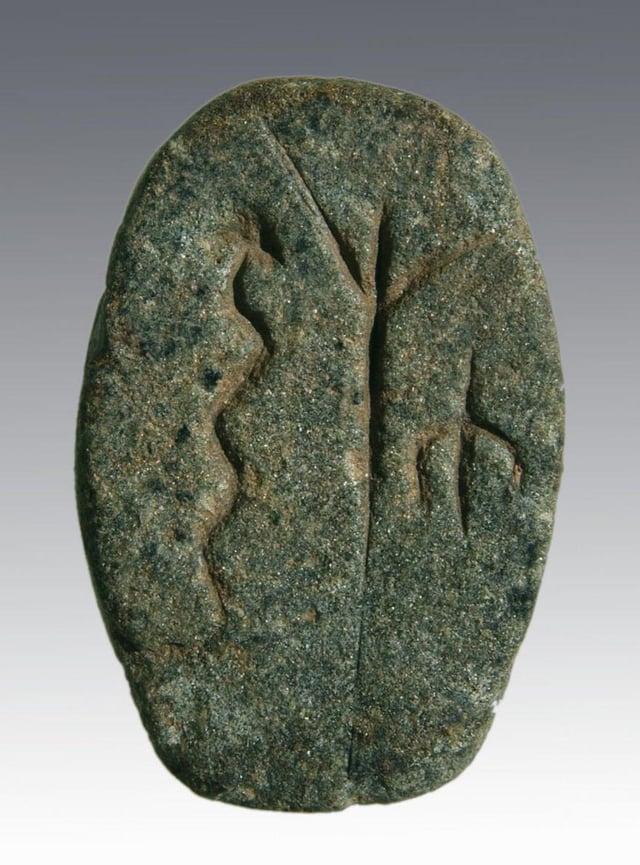
The recent proposal by Irving Finkel, curator at the British Museum and world expert on ancient scripts, regarding the "small green stone" and the existence of a proto-writing as early as the 10th millennium BCE at Göbekli Tepe, and the research concerning the mythological culture of engraved signs in the Atlantic Neolithic, find a focal point in the work of archaeologist Klaus Schmidt. By identifying what he termed "humanity's first sanctuary" in the heart of the Near East (Southeastern Turkey), Schmidt paved the way for an interpretation of the site as a space of convergence where the fixing of meaning through signs becomes a vital necessity. These approaches postulate the emergence of a codified symbolic thought whose ideograms far precede the appearance of cuneiform script in Mesopotamia.
The hypothesis of philologist Irving Finkel, centered on logistical necessity, posits that Pre-Pottery monumentality already required a system of information validation. The analysis of objects such as the "small green stone," interpreted as a stamp seal, suggests the existence of a proto-writing for administrative purposes at the very start of the Holocene. In this model, the engraved sign functions as a tool for ratification and planning, essential for the coordination of resources.
This vision aligns with Schmidt's interpretation: such a construction site, mobilizing groups dispersed around a ritual center, requires an architecture of thought. For Schmidt, the pillars of Göbekli Tepe constitute a device for symbolic enunciation where ideograms (animals, snakes, "H" signs) interact according to a precise logic. The sign functions as a coordination tool, both for the management of men and for the articulation of founding myths.
Stone as a medium of language: toward a megalithic grammar
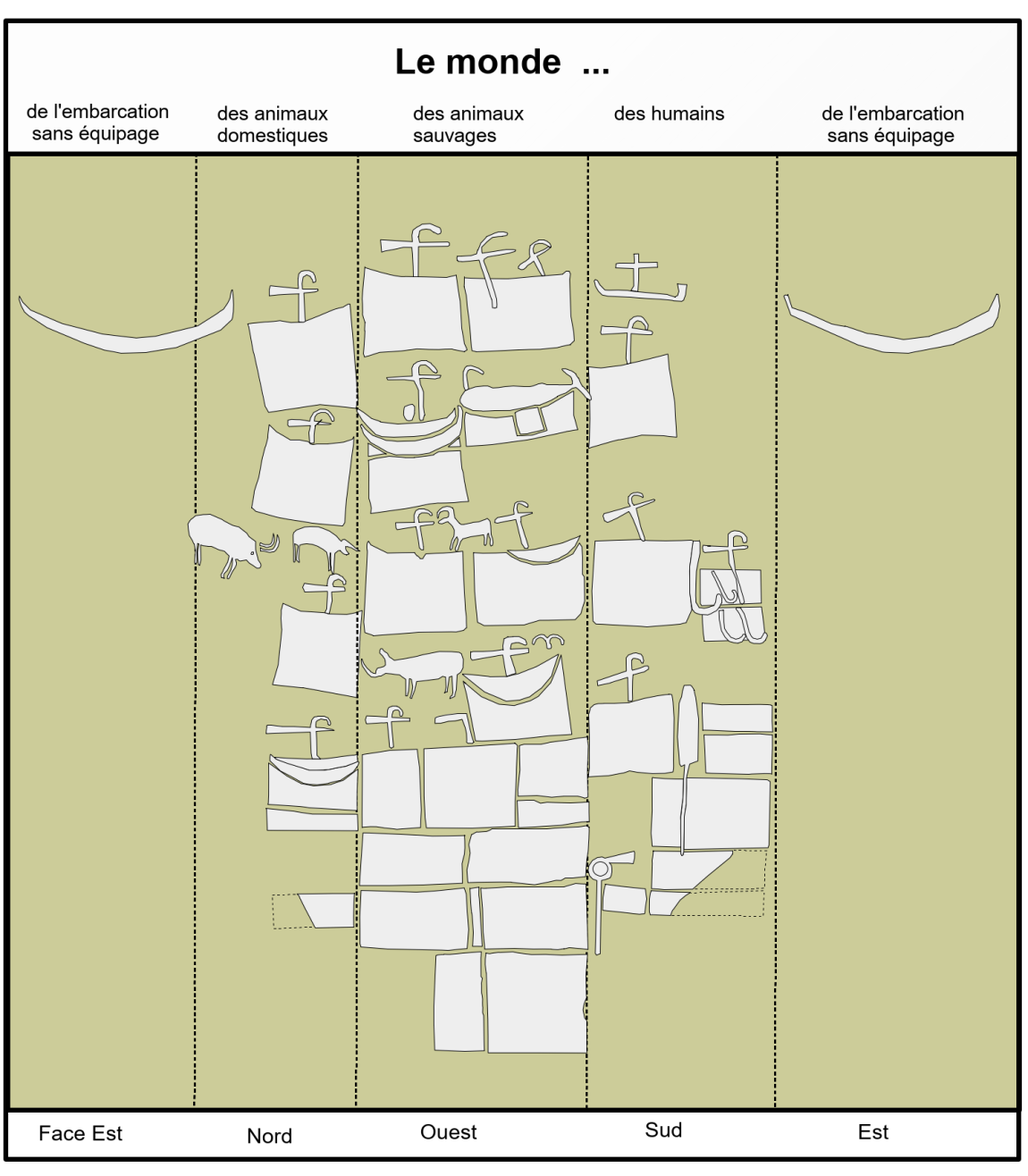
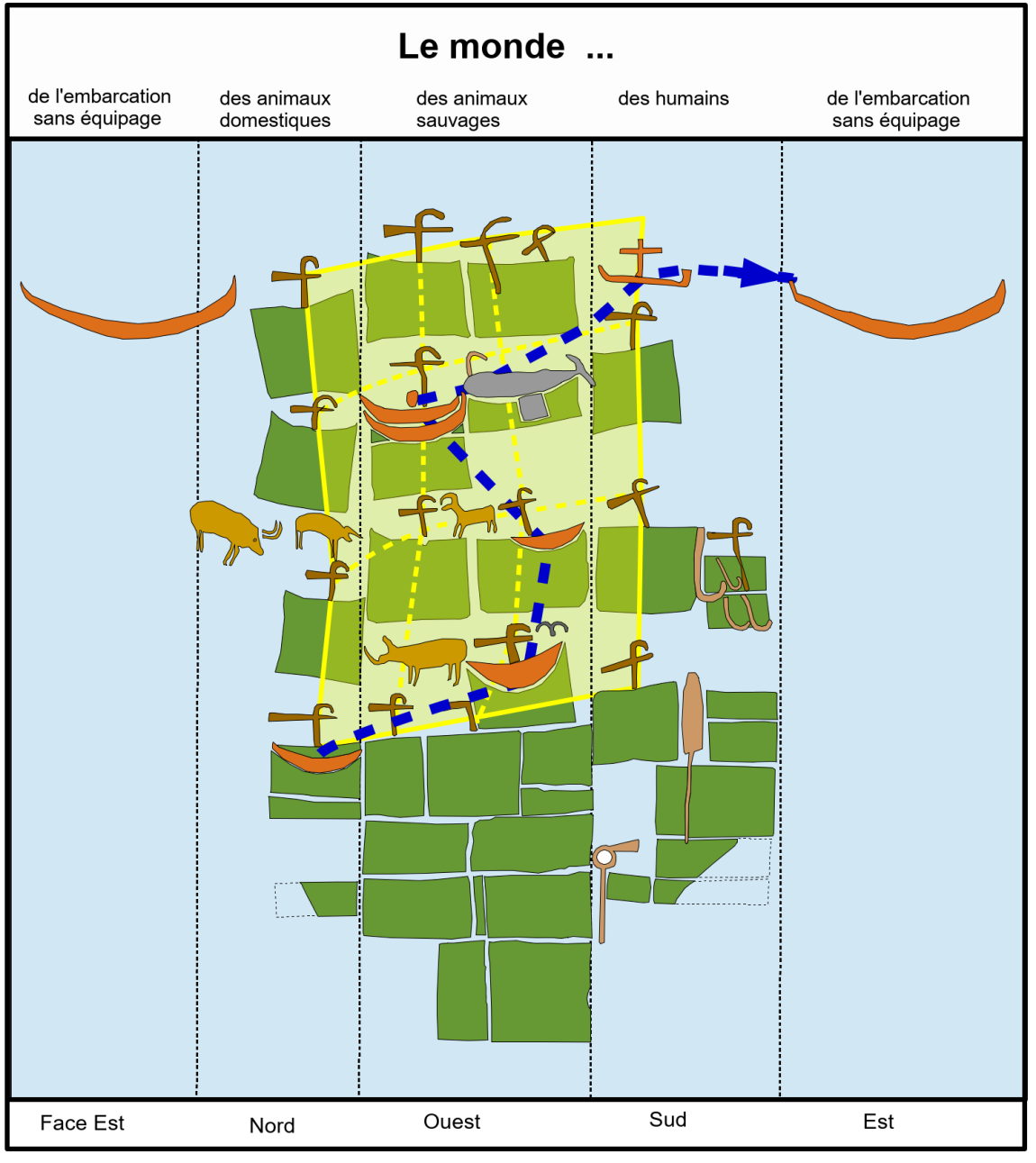
Through its formal kinship with the engraved signs of the Atlantic Arc, this "green stone" embodies the birth of a codified thought where the ideogram becomes the engine of a shared mythological culture, capable of fixing meaning and structuring civilization long before the advent of Mesopotamian writing. This dynamic precisely aligns with the concept of a grammar of signs applied to the megaliths of the Atlantic Arc. Although the latter belong to a later Neolithic period, they inherit this same faculty of semantic projection onto stone. The sanctuary is not a place of passive conservation, but a semantic journey where each engraving—axe, crook, or boat—acts as a syntactic unit. It is not about storing symbols, but about deploying an ideographic framework in space. Where Finkel's seal validates a contractual intention, and Schmidt's sanctuary in the Near East structures a cosmogony through a semiotic arrangement, the megalithic sign marks a "path of the dead," transforming stone into a medium of language that served as the basis for a shared mythological culture across the entire Atlantic coast during the Neolithic.
If one observes the small green stone carefully, one cannot help but be struck by the similarity of certain signs with those of the Atlantic coast. The hieroglyphic and pictographic symbols represent a rising snake, a stylized human figure with raised arms, and a bird in flight. This type of representation finds direct echoes in the corpus of the Atlantic Arc:
• The serpentiform sign: This figure is found at the Gavrinis cairn (Larmor-Baden, Morbihan) or on the Grande Pierre Levée at Saint-Macaire-en-Mauges (Maine-et-Loire). Undulating or broken lines are designated as serpentiform signs. They are always represented in groups, most often at the base of menhirs. The snakes feature a characteristic bulge for the head, as on one of the stelae at Gavrinis (Stele 8) or that of the Manio 2 tumulus mound. In the alignment of the Bretellière plateau (communes of La Renaudière and Saint-Macaire-en-Mauges), at least three stelae out of a set of eight identified feature zigzag snake signs, all engraved vertically: the Bretaudière menhir, the Grande Pierre Levée (known as the Petite Bretellière), and the recumbent slab of the Grande Bretellière (Stele 3). At Kermaillard (Sarzeau), these lines resemble runoff grooves at the top of the menhir. Considering this sign as a snake, its representation at the base of menhirs fits well with the idea of an animal of chthonic origin.
• Anthropomorphic outlines: Represented with simple strokes, they are often associated with vessels. Their number may refer to a scenographic evolution. At Saint-Samson-sur-Rance, the boat with its crew starts from the north face of the stele, at the base of the menhir, and continues diagonally toward the east at the top. When they are at the same level, the number of strokes seems to indicate a progression, with, for example, a greater number of strokes to the west than to the east in the Mané er Groez tomb of Kercado at Carnac. The cross-shaped character (analogous to the human figure on the green stone) may be the sign of awakening