The socialist mayor of Strasbourg, Catherine Trautmann, warned against "a factor of instability and uncertainty" that would result from Alsace's exit from the Grand Est, believing it could harm the city's European influence.
Following the recent vote in the National Assembly on a law recreating the Alsace region, opponents are particularly vocal on the left. In a message addressed to Dernières Nouvelles d’Alsace (DNA), the socialist mayor of Strasbourg, Catherine Trautmann, warned against "a factor of instability and uncertainty" that a departure of Alsace from the Grand Est would entail, believing it could harm the city's European influence.
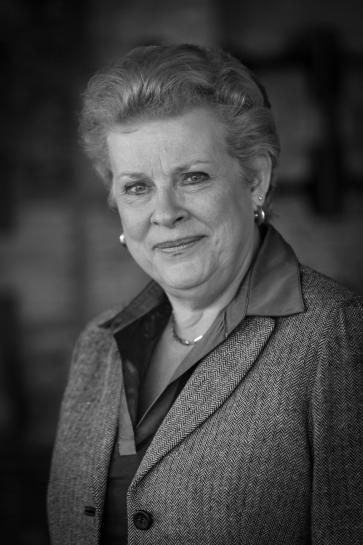 Catherine Trautmann (photo wikipedia de Claude_Truong-Ngoc). Membre du Parti socialiste (PS) depuis 1977, elle est élue députée du Bas-Rhin en 1986, avant d'être nommée deux ans plus tard secrétaire d'État aux Personnes âgées et aux Handicapés.
Elle est une première fois maire de Strasbourg de 1989 à son entrée dans le gouvernement Jospin en 1997, lorsqu'elle devient porte-parole du gouvernement et ministre de la Culture et de la Communication. Elle est également députée européenne à plusieurs reprises entre 1989 et 2014.
En 2000, elle retrouve la mairie de sa ville natale avant de s'incliner face à Fabienne Keller aux élections de l'année suivante. À nouveau tête de liste PS aux élections municipales de 2020, sa liste est devancée. Elle brigue une nouvelle fois la mairie en 2026, où elle s’impose face à la maire sortante écologiste Jeanne Barseghian.
Catherine Trautmann (photo wikipedia de Claude_Truong-Ngoc). Membre du Parti socialiste (PS) depuis 1977, elle est élue députée du Bas-Rhin en 1986, avant d'être nommée deux ans plus tard secrétaire d'État aux Personnes âgées et aux Handicapés.
Elle est une première fois maire de Strasbourg de 1989 à son entrée dans le gouvernement Jospin en 1997, lorsqu'elle devient porte-parole du gouvernement et ministre de la Culture et de la Communication. Elle est également députée européenne à plusieurs reprises entre 1989 et 2014.
En 2000, elle retrouve la mairie de sa ville natale avant de s'incliner face à Fabienne Keller aux élections de l'année suivante. À nouveau tête de liste PS aux élections municipales de 2020, sa liste est devancée. Elle brigue une nouvelle fois la mairie en 2026, où elle s’impose face à la maire sortante écologiste Jeanne Barseghian.This analysis is strongly contested by Pierre Klein, president of the Alsatian Citizens' Initiative (ICA), who has sent a reasoned response.
According to him, the creation of the Grand Est region has, on the contrary, weakened Strasbourg. He recalls that a document published in 2018 by the ICA highlighted the loss of numerous institutions, administrations, and headquarters to other cities in the enlarged region.
The observation is detailed in a study provided as an attachment, which lists the relocation or establishment outside of Strasbourg of multiple regional structures. This administrative dispersion concerns both state departments and professional, sports, or cultural organizations, often based in Nancy, Metz, or Reims.
A "facade regional capital"?
For Pierre Klein, this situation has transformed Strasbourg into a "facade regional capital," paradoxically weakening its credibility as a European capital.
"How can one sustainably aspire to be a European capital if one is not even a true regional capital?" he questions.
Contrary to Catherine Trautmann's remarks, he believes that the return of an autonomous Alsace region would, on the contrary, strengthen Strasbourg. The city would regain, according to him, administrative and institutional functions that are currently dispersed, which would benefit the entire Alsatian territory.
A debate that goes beyond Alsace
This new exchange illustrates the persistence of the discomfort created by the territorial reform of François Hollande in 2015. As a reminder, this major reform was not announced during his presidential campaign. It passed quietly without any consultation of the concerned citizens. The coherence between administrative organization, territorial identity, and political influence remains a thorn in the side of this 5th Republic. A majority of Bretons, including those in Loire-Atlantique, want an administrative region that includes the five departments. During the 2015 reform, it was mainly the PS mayors of the large Breton cities who opposed it.


Commentaires (0)
Aucun commentaire pour le moment. Soyez le premier à réagir !